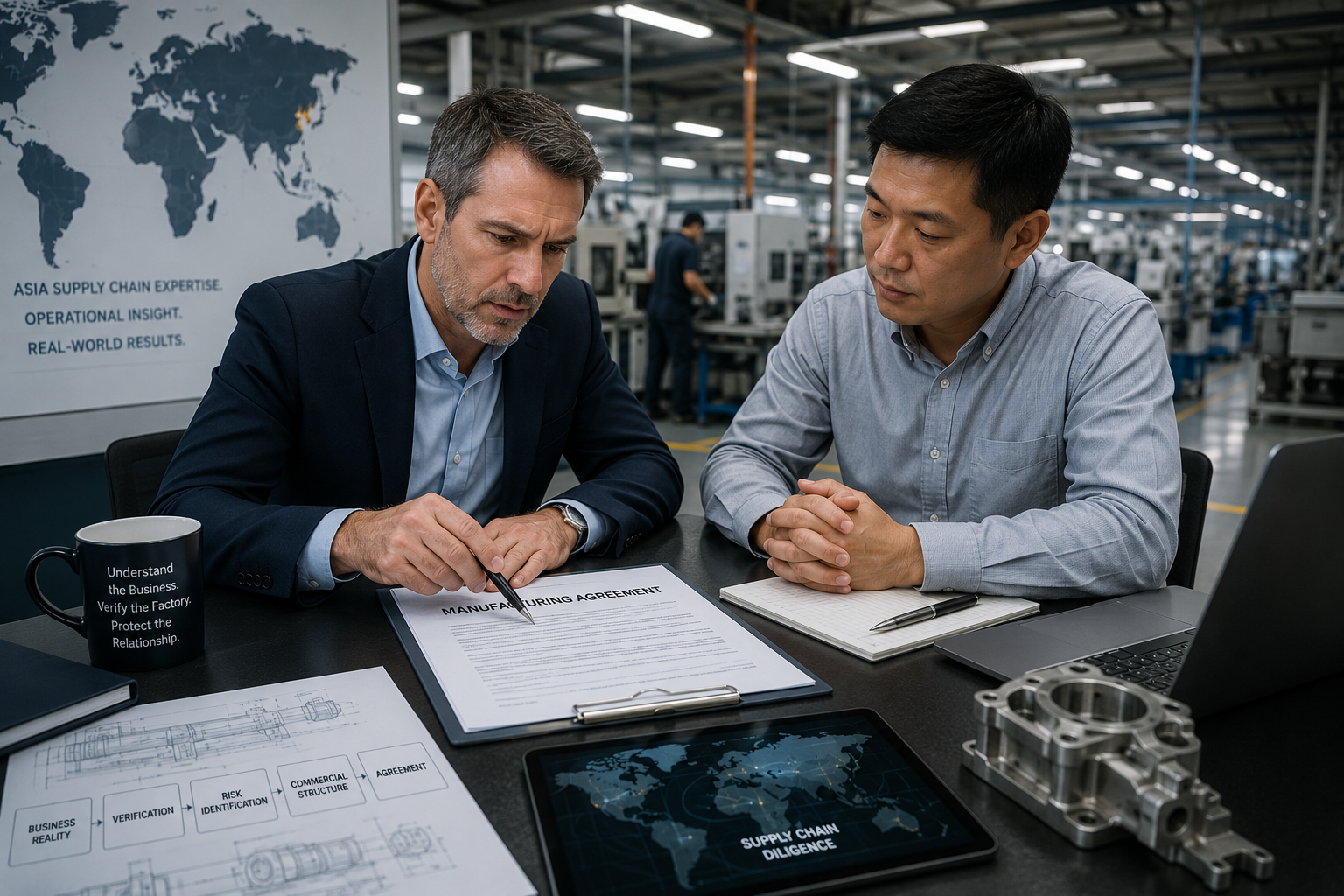
I have spent much of my career working with manufacturers throughout Asia. One lesson has stayed consistent. A manufacturing agreement matters, but it cannot protect you from a business relationship you do not fully understand.
I recently read an article by international attorney Dan Harris about companies using AI to help develop manufacturing agreements. His point caught my attention because I see the same issue from the manufacturing side. Technology can help create a detailed agreement. It cannot verify what is actually happening inside the supply chain.
Before negotiating pages of legal language, I want to understand the operating relationship. Which legal entity are we doing business with? Is that company actually manufacturing the product? Where will production occur? Who owns the tooling, and where is it physically located? Who controls the BOM and approves component changes? Can production be subcontracted? If the factory participates in engineering or modifies our design, who owns that work?
These are not just legal questions. They are operating questions, and the answers should shape the agreement.
I have worked with Asian factories where the relationship went well beyond issuing a purchase order. Engineering teams worked together. Factories invested in tooling. Suppliers helped solve component and manufacturing problems. Those relationships can create significant value, but they also create dependencies that need to be understood before the business scales.
Quality is a good example. A contract can state that a supplier cannot substitute a component without approval. That language has limited value if your company does not control the approved BOM, engineering change process, inspection requirements, and production records.
The same applies to tooling. Writing that you own a mold is different from knowing who paid for it, where it is located, how it is identified, and whether you can move it if the relationship ends.
AI will make contracts easier to create. I think that makes experienced judgment more important, not less. Start with the business. Understand the factory. Verify the operating structure. Identify where the real dependencies and risks exist. Then work with qualified legal counsel to build an agreement that fits the country, the product, and the actual relationship.
A strong manufacturing agreement should document a well-understood business relationship. It should not be used to create the appearance of one.
Source note
Inspired by Dan Harris, “AI Didn’t Replace Lawyers. It Gave Us the 48-Page Contract,” Harris Sliwoski, September 1, 2026. The legal observations in this article are framed as operational considerations, not legal advice.