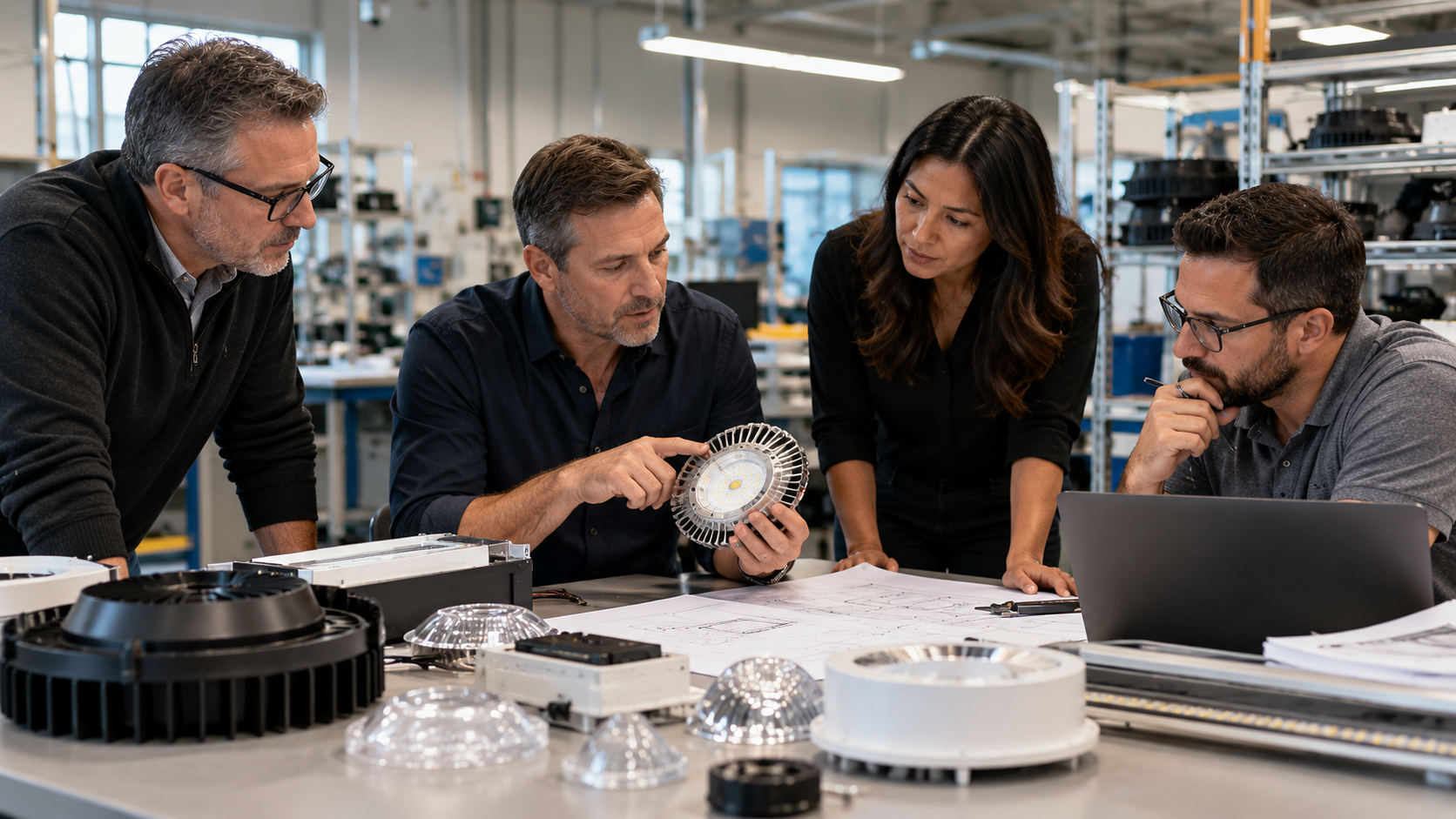
Just because a company can build something doesn’t mean it should.
OEMs face this decision all the time. Develop the technology internally? Add engineering resources? Invest in tooling and manufacturing equipment? Acquire the capability? Or work with a partner that already does it extremely well?
The answer shouldn’t start with the factory. It should start with the customer.
What problem are we solving? What does the customer value? Where does our product create meaningful differentiation? Once those questions are clear, leadership can decide which capabilities to keep in-house and which to source from the right strategic partners.
In lighting, that distinction matters.
An OEM doesn’t necessarily need to manufacture every LED board, driver, optic, control, or mechanical component. But the organization needs to understand how those pieces work together. Thermal management, color quality, dimming performance, optics, controls, reliability, and serviceability eventually become the customer’s experience.
You can outsource manufacturing. You can’t outsource accountability.
The same discipline applies to sourcing. Lowest unit cost is only one part of the equation. Landed cost, lead time, capacity, quality systems, tooling ownership, geographic exposure, tariffs, engineering support, and a supplier’s ability to respond when something goes wrong all matter.
The cheapest component isn’t very cheap when it delays a product launch or creates problems in the field.
This is where the right manufacturing partnership creates real value. A strong partner doesn’t just quote a drawing and build to print. They understand the application, challenge assumptions, identify manufacturing risks, and bring ideas that can improve the product before it reaches production.
That’s where human-centered product development and good sourcing practices come together. Start with what the customer needs, design around the application, and then build the supply chain capable of delivering it consistently.
That doesn’t mean outsourcing everything.
Some capabilities are central to competitive advantage and need to stay close. Intellectual property, application knowledge, customer relationships, and critical engineering capabilities may be too important to surrender.
Leadership must know the difference between a core competency and a capability the business simply needs access to.
The strongest OEMs aren’t necessarily the ones that manufacture the most themselves. They know what they need to be great at. They protect those capabilities, choose their partners carefully, and remain accountable for the result.
You don’t have to build everything. But you do have to own the outcome.